Pest-control documentation can form part of a food business's hygiene and pest-management records. Exact documentation requirements depend on the applicable FSSAI requirements and the nature of the food business.

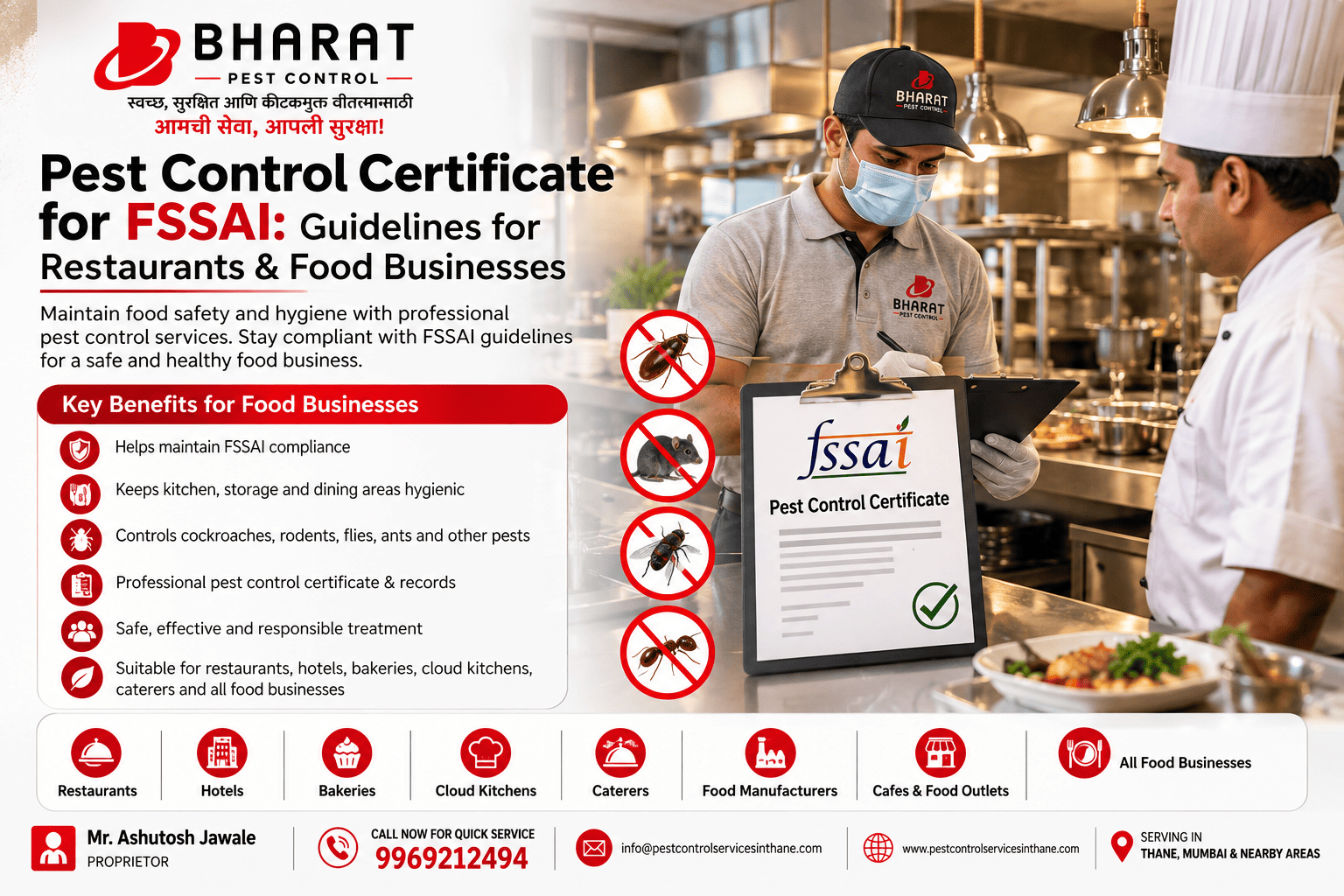
Pest Control Certificate for FSSAI: Guidelines for Restaurants & Food Businesses
For restaurants, hotels, cloud kitchens, bakeries, food manufacturers, caterers and other food businesses, effective pest management is an important part of maintaining food hygiene and safety.
Pests such as cockroaches, rats, mice, flies, ants and other insects can contaminate food, packaging, equipment and food-contact surfaces. A proper pest-control programme helps food businesses reduce these risks and maintain a hygienic premises.
Many food businesses also look for a pest control certificate for FSSAI as part of their documentation and food-safety compliance process. This guide explains the role of pest-control documentation, practical pest-management measures and important considerations for restaurants and food businesses.
What Is a Pest Control Certificate for FSSAI?
A pest control certificate is a document provided by a pest-management service provider after carrying out pest-control treatment or establishing a pest-management programme at a premises.
For a food business, pest-control documentation can help demonstrate that appropriate measures are being taken to prevent and control pest infestation. Depending on the business, records may include the food business name and address, service date, type of treatment, areas treated, treatment methods, service provider details, technician details, recommendations and the next service or inspection date.
Why Is Pest Control Important for Restaurants and Food Businesses?
Restaurants and food establishments have several conditions that can attract pests, including food materials, waste, moisture, storage areas, drains and cooking activities.
- Food contamination and hygiene risks
- Damage to food packaging and stored materials
- Contamination of food-contact surfaces
- Damage to electrical wiring and equipment
- Unpleasant odours and customer complaints
- Increased food-safety and operational risks
FSSAI and Pest Control Requirements
FSSAI food-safety requirements place importance on maintaining hygienic premises and controlling pests in food businesses. Food businesses should have appropriate measures to prevent the entry and harbourage of pests and should maintain their premises in a condition that supports food safety.
An effective pest-management programme should consider prevention of pest entry, identification of potential harbourage areas, regular inspection, appropriate treatment, safe food storage and handling, waste management, cleaning, sanitation and documentation.
Important: The exact documentation and compliance requirements can vary depending on the type and scale of the food business. Businesses should refer to the latest applicable FSSAI regulations, guidance and licensing requirements for their category.
What Should a Restaurant's Pest Control Programme Include?
A professional pest-control programme should not simply involve spraying chemicals whenever pests are seen. A proper programme should follow an integrated approach based on inspection, identification, prevention, targeted treatment, monitoring and records.
1. Pest Inspection
The pest-control professional should inspect areas where pests may enter, hide, feed or breed.
- Kitchen and food preparation areas
- Dry-storage rooms and refrigeration areas
- Dining areas and washrooms
- Garbage storage and waste-disposal areas
- Drains, service ducts and false ceilings
- Doors, windows, wall and floor gaps
2. Identification of Pest Activity
Different pests require different control strategies. Common pests found in food businesses include cockroaches, rats, mice, house flies, fruit flies, ants and stored-product insects. Correct identification helps the pest-control professional select an appropriate control and monitoring method.
3. Professional Pest Control Treatment
Depending on the pest, infestation level, location and type of food operation, professional pest management may involve gel treatment, traps, monitoring stations, bait stations, targeted insecticide treatment, fly-control systems, rodent control and crack-and-crevice treatment.
Food, utensils, food-contact surfaces and preparation areas should be protected during treatment. Products must be used strictly according to approved label directions and applicable requirements.
4. Follow-Up and Monitoring
Pest control should be treated as an ongoing preventive programme rather than a one-time activity. Follow-up inspections help determine whether pest activity has reduced, whether new entry points have developed, whether additional treatment is required and whether sanitation problems are attracting pests.
Pest Control Certificate for Restaurant
Restaurants may need pest-control documentation as part of their internal food-safety records and compliance documentation. A professional pest-control service provider can maintain service records containing details such as:
- Customer or food business name
- Service or inspection date
- Pest covered
- Treatment or control method used
- Areas inspected or treated
- Technician and service-provider details
- Recommendations and preventive actions
- Recommended follow-up or next service date
Pest Control Certificate for FSSAI License and Compliance
When a restaurant or food business is preparing or maintaining its food-safety documentation, pest-control records can be an important supporting part of its hygiene-management system.
However, a pest-control certificate does not by itself mean that an FSSAI licence or registration is approved or guaranteed. FSSAI licensing and compliance depend on the applicable requirements for the specific food business. A pest-control service provider can provide appropriate treatment documentation and records, while the food business remains responsible for maintaining overall food-safety compliance.
How Often Should Restaurants Get Pest Control?
There is no single frequency that is suitable for every food business. The appropriate schedule depends on the type of food business, premises size, pest pressure, location, food-storage conditions, waste-management practices, previous infestation history, building condition and seasonal pest activity.
Restaurants with frequent pest activity may require more frequent inspection and monitoring. A professional pest-control company can recommend a treatment and monitoring schedule based on site conditions.
Common Pest Problems in Restaurants
Cockroach Control
Cockroaches can hide in kitchens, drains, equipment areas, cupboards, cracks and other warm or humid locations. Particular attention should be given to kitchen equipment, sink areas, drainage, storage cabinets, wall cracks and food-storage areas.
Rat and Mouse Control
Rodents can enter through small openings and may damage food packaging, electrical wiring and other materials. Restaurants should inspect doors, pipe openings, drainage areas, storage rooms, false ceilings, service ducts and garbage areas. Effective rodent control should include population control and prevention of future entry.
Fly Control
Flies can be attracted by food waste, organic matter, drains and uncovered food. Proper waste disposal, covered food, clean drains and suitable fly-control measures can help reduce fly activity.
Ant Control
Ants can enter food preparation and storage areas in search of food and moisture. Removing food sources, maintaining cleanliness and treating entry and nesting areas can help control ant activity.
Integrated Pest Management for Food Businesses
Restaurants should consider an Integrated Pest Management (IPM) approach. IPM combines prevention, inspection, monitoring and targeted treatment.
Inspect → Identify → Prevent → Treat → Monitor → Record
This approach focuses on controlling the conditions that allow pests to enter, feed, breed and survive instead of relying on unnecessary chemical applications.
How Restaurants Can Prevent Pest Infestation
- Keep food covered and stored properly
- Clean food spills immediately
- Empty waste bins regularly
- Keep garbage areas clean
- Maintain clean drains and drainage areas
- Seal cracks, gaps and pipe openings
- Repair damaged doors, windows and screens
- Remove unnecessary clutter and unused materials
- Inspect incoming food materials and packaging
- Clean beneath and around kitchen equipment
What Documents Should a Food Business Keep?
Depending on the business and applicable requirements, food businesses should maintain relevant food-safety and pest-management records. Pest-control documentation may include service reports, treatment records, pest-control certificates, inspection reports, pest-monitoring records, product or chemical details where applicable, service schedules and corrective-action recommendations.
Choosing a Pest Control Company for a Restaurant
Food businesses should select a pest-control provider carefully. Consider the company's relevant professional credentials, experience with food businesses, documentation practices, treatment procedures and approach to inspection and prevention.
Restaurants and food-processing facilities require careful pest-management procedures. Treatment should be planned to minimize risks to food, employees, customers, equipment and food-contact surfaces.
Pest Control for Restaurants and Food Businesses in Thane
Restaurants, hotels, bakeries, cafes, cloud kitchens, caterers and other food businesses in Thane can benefit from a structured pest-management programme.
Bharat Pest Control Service provides professional pest-control solutions for different types of premises, including services for common restaurant pests such as cockroaches, rats, mice, ants and flies.
The service can include inspection, treatment, monitoring and recommendations for preventive measures based on conditions found at the premises. For food businesses, the objective is not simply to eliminate visible pests but to establish a practical pest-prevention and monitoring system.
Frequently Asked Questions
-
Is a pest control certificate required for FSSAI?
-
What is a pest control certificate?A pest-control certificate or service document generally records that pest-control treatment or inspection was carried out at a particular premises. The format and information depend on the service provider and business requirements.
-
Can a pest control company provide a certificate for a restaurant?Yes. A professional pest-control service provider can provide appropriate treatment or service documentation for a restaurant or other food establishment after carrying out the agreed service.
-
What pests should restaurants control?Common restaurant pests include cockroaches, rats, mice, flies, fruit flies and ants. The appropriate control method depends on the pest and conditions at the premises.
-
How often should pest control be done in a restaurant?Frequency should be determined based on pest activity, risk assessment, premises conditions, previous infestation and the type of food operation. Regular inspection and monitoring are important.
-
Does a pest control certificate guarantee FSSAI compliance?No. A pest-control certificate is only one part of a broader food-safety and hygiene-management system. It does not by itself guarantee FSSAI approval or compliance.
Need Pest Control Documentation for Your Food Business?
Contact Bharat Pest Control Service in Thane for professional pest inspection, treatment, monitoring and service documentation for restaurants and food businesses.
Contact Us